A Resistance That Cannot Resist
Karl Barth on Holding Out as Theologians

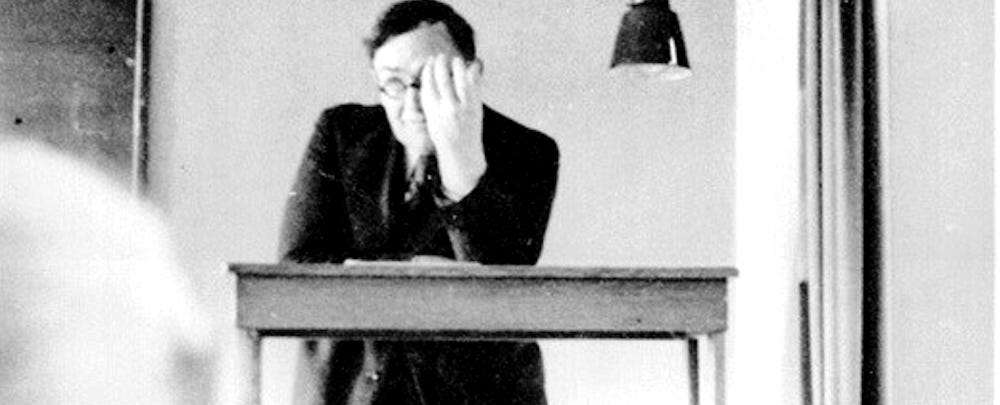
On May 30, 1933, four months into the Third Reich, Karl Barth stood before a room of students and told them why theology mattered in a time of crisis. I thought about his words from that morning as I taught my own students this semester.
Two months earlier, the Reichstag had passed the Enabling Act, giving Hitler near total power. The German Christians—the movement of Protestant leaders who wanted to align the church with National Socialism—were working to seize administrative offices in the church. The writing was on the wall. Every Protestant pastor would face a decision to submit or resist.
What Barth said to his students has come down to us through their notes. The times were agitated, he told them; everyone was being pulled into the conflict. This was a challenging moment, especially for students. Their task was not to rush into the fight, but to stick to the core: “Now it comes entirely down to this, that the foundation which stands immovably remain visible.”
Barth reached for a familiar word. Most of his students had been children during the Great War, and they had grown up hearing the slogan that defined the German home front through suffering and shortage: Durchhalten. Hold out. It had been printed on posters, painted on walls, preached from pulpits. It was the word that held a nation in the trenches even after the cause was lost. The word was being conjured again by the Nazi Party.
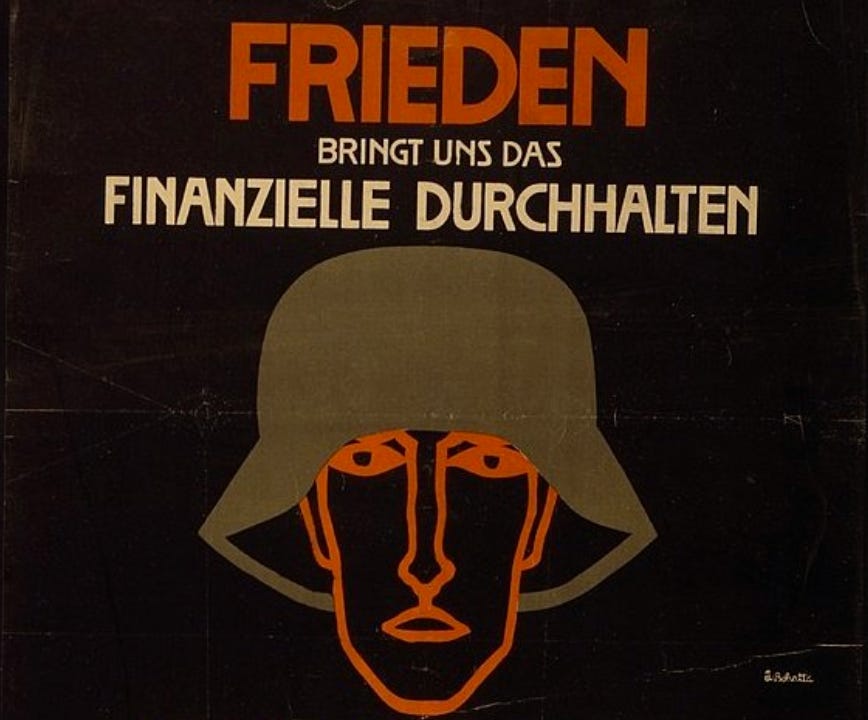
Barth took the word, transformed it, and gave it back.
The situation of students in 1933 is similar to that of the students in 1914. They were called from their work to war, and yet today’s situation is not the same. We are not called to put our notebooks aside. There is no postponing of concrete work. Now the slogan of the war applies to us, in our sense: Hold out! as theologians!
This is what resistance looked like in May 1933: a roomful of students being told to keep studying with vocabulary reclaimed from the propaganda of empire. Barth was not only concerned about the content of their theology but the disposition with which they held it. They were entering a time when having the right answers was not enough.
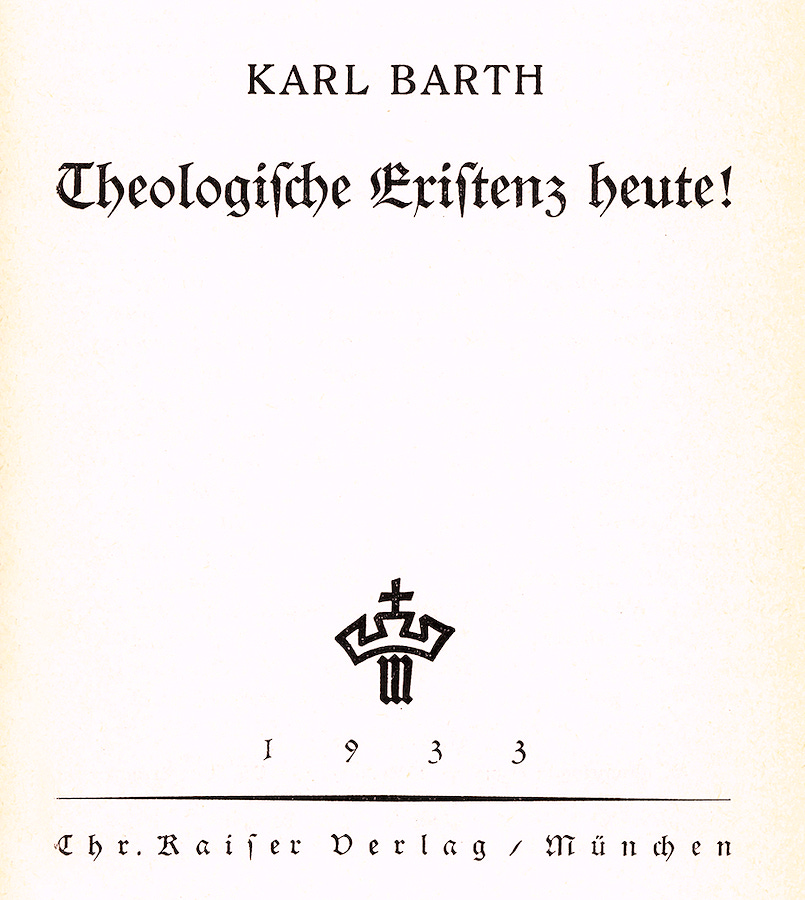
A month later, Barth advanced the same argument in Theological Existence Today!, applying it to the entire church.
His essay took apart the heretical theology of the German Christians with precision. But the bulk of the text took aim at the Young Reformers, the church resistance movement. They opposed the German Christians, rejected anti-semitism, and wanted an independent church free from political coordination. But Barth was not impressed. In fact, he believed the Young Reformers were even more dangerous to the church. The German Christian heresy announced itself to anyone with a Bible and a catechism. The Young Reformers looked like the cure but left the actual disease untouched.
What was the disease? Both the Young Reformers and the German Christians, Barth wrote, were equally heirs of “the fatal theology of the nineteenth century.” Both had inherited, and both were committed to defending, what Barth called a theology of mediation, a both-and theology: “creation and redemption, nature and grace, nation and gospel.”
The phrase “nation and gospel” is the diagnostic key. Beneath their public conflict, the German Christians and the Young Reformers shared the conviction that Germany stood in a positive relation to God. They simply disagreed about the details. The German Christians wanted the gospel fused with German politics, the church racialized, the Führer principle imported into ecclesiology, the Jewish elements of the Bible relegated. The Young Reformers wanted the gospel preserved alongside political allegiances, the church formally independent, the Old Testament retained, but the underlying conviction—that the German people had a special place in God’s purposes—kept intact.
The Young Reformers wanted to resist the German Christians without rejecting the relation between nation and faith that made their error possible. This left them resisting the German Christians on political rather than theological terms. The church struggle, Barth wrote, had become “counter-tactic versus tactic, counter-maneuver versus maneuver, counter-declaration versus declaration.” Two factions, both committed to the same both-and theological framework, exhausting themselves in political combat that could not reach the actual disease because neither side could name it.
The worst response to a disease is to treat the symptom while leaving the underlying cause intact. The Young Reformers were like an antibiotic course cut short, killing the vulnerable strains while leaving the stronger ones to multiply. And so it was no surprise that the resistance spent the summer of 1933 fighting and losing, while the deeper disease—the both-and theology joining nation and faith—kept doing its work.
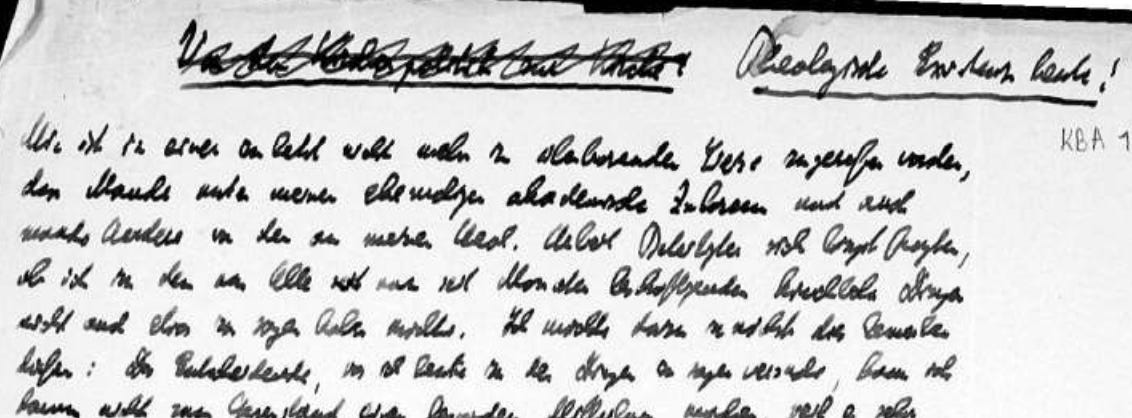
In Barth’s diagnosis, the German Christian movement was not an alien invasion of the German church. It was the church’s faulty theology made fully visible. The events of 1933 were the expression of a corruption that had pervaded the German church for at least two centuries. The crisis was God’s judgment, exposing how endangered the gospel and lordship of Christ had become in the church.
Genuine resistance against Christian nationalism must address the root of the disease rather than engage in tactical maneuvering inside a shared framework.
For Barth, this kind of resistance requires the church to pursue a purely “theological existence.” He put it this way, in the heart of his essay: “What we now primarily need is a spiritual center of resistance, one that would first give meaning and substance to any church-political one.” The order matters. Not theological instead of political. Theological first, so that the political can have substance. The church that engages in a spiritual resistance becomes “the natural boundary of every state, even the totalitarian state.”
This is the argument: The church’s theological existence must be the basis and content of its political resistance. When the church is actually being church—that is, when its existence is defined solely by its allegiance to Jesus Christ and not by a both-and relation of Christ and nation—the church becomes an intrinsic limit to the power of the state, a wall the state cannot breach, a boundary it cannot cross. The path to genuine resistance requires unwavering, exclusive loyalty to Jesus.

The problem Barth diagnosed in 1933 was not peculiar to Germany or to that decade. It is a problem that arises whenever the Christians link their faith with national identity. Eventually, a movement arises that takes this theology to its logical political conclusion.
This is the best way to understand the problem the American church faces in 2026.
The MAGA-aligned Christian nationalist movement is not an alien intrusion into American Christianity. It is the most direct expression of theological impulses that have run through the American church for centuries: a substitution of America in the place of Israel in the biblical story, a capture of the church by hierarchical ideologies, a faith instrumentalized for the pursuit of the American dream, a deep and largely unexamined link between the gospel and American culture. This both-and joining nation and faith has appeared in liberal and conservative forms, in the mainline establishment and revivalist meetings. We are simply seeing what this theology looks like when it reaches its fullest political expression.

The Christians who are resisting are right to oppose what is being done to immigrants, the rule of law, the constitutional order, and the dignity of vulnerable people. There is no moral equivalence between MAGA Christian nationalism and those resisting it.
The question is whether a resistance that shares the premises of the underlying theology can actually heal the disease. Many of those resisting within the church still focus on America as a meaningful theological subject. They reach reflexively for the nation: “this isn’t who we are,” “the soul of America,” “America’s true values.” The prophets are conscripted into the defense of constitutional norms. The Sermon on the Mount is enlisted on behalf of the republic. In this way, the resistance assumes that the church’s task is to acquire and deploy political power, just for different ends than Donald Trump wants. It pulls Scripture into political arguments rather than letting Scripture interrupt and reorient the framework in which the arguments are happening. It operates with the same instinct that replaced biblical Israel with America as the people through whom God works in the world.
From the vantage point of Barth’s essay, much of the Christian resistance to nationalism in America replays the Young Reformers' mistake: it cannot reach the disease because the disease is the both-and of nation and faith, and this both-and is precisely what makes the resistance’s actions intelligible to itself. The result is just more politics.
Barth teaches us that faithful resistance to Christian nationalism begins with refusing its underlying theological framework, not just contesting its outcomes.
What kept the Young Reformers from offering this refusal in 1933? An answer surfaces in a sermon Barth preached in Bonn the week after Theological Existence Today! was published. He drew from Luke 6, the passage on mercy and judgment: Be merciful, even as your Father is merciful. Judge not. Condemn not. Forgive. Barth focused on the biblical text, but the current situation was never far from view.
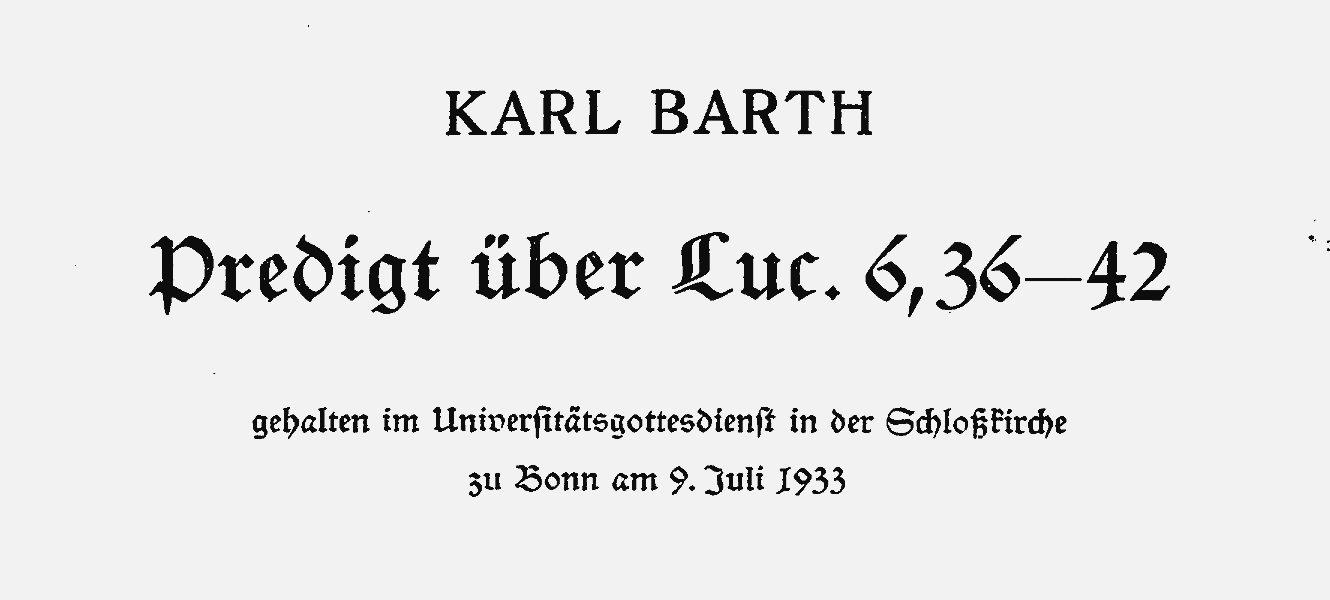
His essay named the disease ecclesiologically: The church loses its theological existence when it stops following the exclusive lordship of Jesus Christ. The sermon named the disease in the heart: The church’s capture by politics happens when Christians stop living from the mercy of God and start living from the conviction of their own goodness.
Those seeking to resist abuse and error are especially vulnerable to this error, because whenever people see themselves as “the good side,” they are liable to appoint themselves as God’s representatives. Barth’s critique of this posture is severe, especially for those who seek to resist nationalism. It is to play God to one’s neighbor, to claim the office of judge and avenger, to deal harshly with people in the name of righteousness, to do to others precisely what God in his mercy refuses to do to us. In his essay, Barth argued that resistance without theological substance produces only “counter-tactic versus tactic.” The sermon names what fills the vacuum where the substance should be: the delusion of one’s own goodness, which is the original sin, eritis sicut Deus—you will be like God.
To illustrate the consequences, Barth asks a question of the resistance:
Why is it that we never truly feel well on this path, although it is such a natural and apparently so sensible path? And why must one judge, taking the whole into account, that precisely through the massive efforts to make the world and people better through this path—the path of the struggle of the good against the evil—the evil only grows greater? Why is it that for every source of evil plugged on this path, three or ten others newly open?
This is the antibiotic logic in pastoral form. The both-and theology grows more powerful because the posture of those resisting shields it from view. To stand in the position of “the good side” is to lose the angle from which the true problem can be seen. The Young Reformers could not name the theological framework they shared with the German Christians because to name it would have been to surrender the moral high ground from which they were fighting.
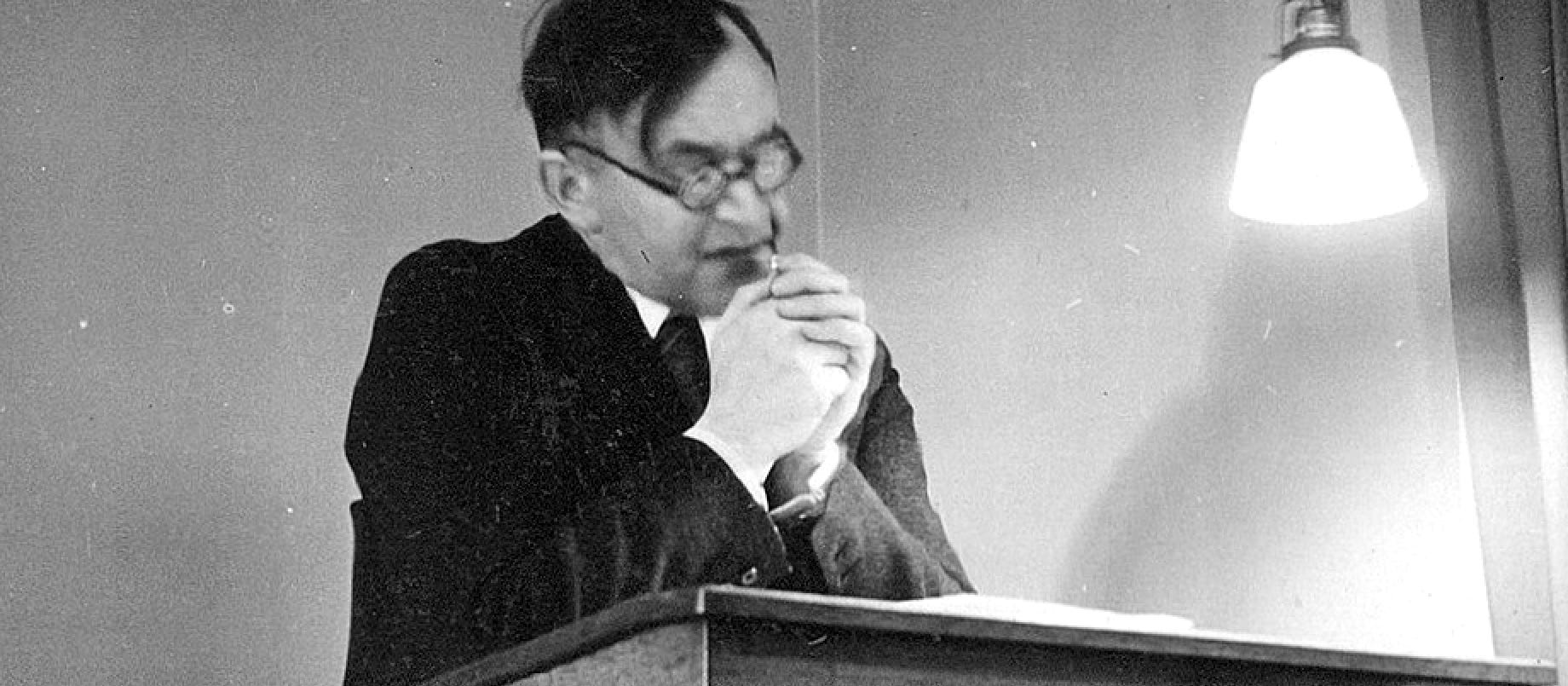
This pastoral word was as hard for Barth’s audience to hear as it is for me to hear today. It would be easier to accept that I have a purely theological problem, because the solution to that problem is to adjust my ideas. I can do something about that.
But Barth names a spiritual temptation that belongs to me—and to all of us, on every side of every conflict—the moment we discover the good and claim it as our own. The temptation to play God to my neighbor is not lessened by being on the right side of history. It is intensified by it.
Even if I correctly identify the error of Christian nationalism and am right about the treatment of immigrants, the rule of law, and the dignity of the vulnerable, I am not exempt from losing my spiritual footing and claiming power over my neighbor. My rightness gives the disease perfect cover, and I am liable to become a mirror image of the problem I oppose. The path of the supposedly good fighting the supposedly evil, undertaken from a posture of self-assured righteousness, produces the same kind of politics it claims to oppose.
The cure is not to find the right side and fight harder. The cure is to stop claiming to stand on the good side and to start, every morning, again and again, living from God’s mercy. This is the deeper meaning of a theological existence. It is not merely a refusal of the wrong theological ideas about God and nation. It is a refusal of the posture from which those ideas grow. It is the daily, disciplined recognition that we are not the good people who can lay claim to God’s blessing on our cause, our nation, ourselves. We are the people whom God, in mercy, refuses to abandon to ourselves. Any resistance movement worthy of the name will proceed from the knowledge of this mercy, not from the conviction of the righteousness of our cause. And the path to this knowledge begins and ends with the name Jesus.
This was the direction Barth told his students to take on that May morning in 1933. Durchhalten, he told them. The slogan of the war, given back. Hold out as theologians. Keep your eyes fixed on Christ alone.
Then enter the struggle as a recipient of mercy.
Masterful. Thank you. And perfect timing for me.
What keeps this (undoubtedly true) insight about the dangers of self-righteousness from sliding into a theologically sophisticated version of the "both-sides" posture that bothered Bonhoeffer and MLK? Quietism may not be exactly the right word, since you're clearly not counseling withdrawal, but I'm reaching for something in that neighborhood. You say there's no moral equivalence between MAGA Christian nationalism and the church's resistance to it. But the rhetorical center of gravity keeps pulling the resisters back toward the dangers of becoming "a mirror image" of what they oppose. By the end, the spiritual condition of the resisters is doing most of the work, and the actual asymmetry recedes.
This is where I keep wanting Bonhoeffer in conversation with Barth. Bonhoeffer accepted the same diagnosis (the both-and of nation and faith is the disease, self-righteousness on "the good side" is a real temptation), but he didn't necessarily conclude that we need to fix our theological posture before acting. I ask as someone formed by both Barth and Bonhoeffer, usually looking for a productive synthesis. Where do you locate the “spoke-in-the-wheel” moment in your reading of Barth here? Does Karl ever get us there or do we need to go beyond him?