A Strange Examination
Karl Barth and the Problem of Two Voices

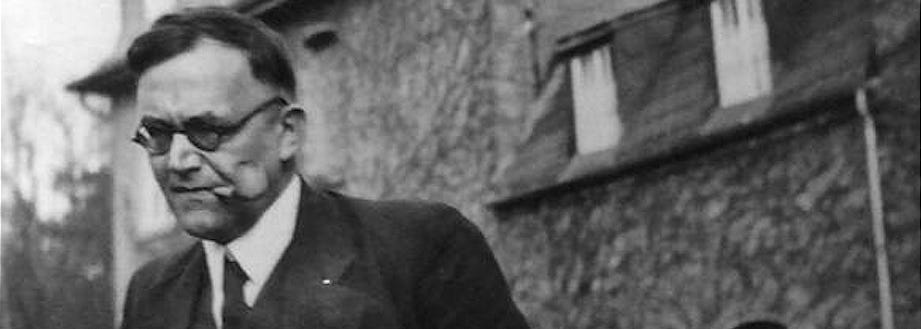
In April 1932, Karl Barth sat before a room full of Protestant church administrators and pastors. He had been invited to clear the air.
For two years, Barth had been criticizing church authorities for speaking more about their leadership skills than God and the gospel. Articles had gone back and forth, sparking fiery debate. With Barth scheduled to lecture at the Brandenburg Mission Conference in Berlin, church leaders saw an opportunity to lower the temperature. Siegfried Knak, the Protestant church’s Director of Mission, invited Barth to arrive a day early for an open conversation. Knak hoped they could find common ground. So did Barth.
Nearly a hundred Protestant leaders attended. After introductory remarks by Knak, Barth sat in front of the room and waited. For almost a minute, no one spoke. Finally, Knak broke the silence, but he did not raise a question about the substance of Barth’s theological criticisms. Instead, he asked whether Barth believed a Swiss citizen could truly feel the patriotism a German feels. This question opened the floodgates, and others followed. Again and again, the audience emphasized that German theologians had to speak to the needs of the German people, and doubted whether a Swiss like Barth could ever grasp what the German church required in this critical hour.
Barth later said he had felt “strangely examined.” He had come to talk about God and the church, but all the church leaders wanted to talk about was politics, and they judged every theological answer he gave through a political lens. All the while, they thought they were speaking theologically.

Barth's strange afternoon is more familiar than I would like. Over the past few years, a particular sort of criticism has been arriving in my inbox on a regular basis—and I am hardly alone. Pastors, administrators, teachers, and professors of many kinds have had some version of the same experience. The criticism comes clothed in the oldest words the church owns: orthodox, biblical, faithful, and their shadows, heretical, compromised, unfaithful. But the questions underneath are seldom the ones the words announce. A pastor is faulted for a sermon that failed to draw approved conclusions. A woman's teaching is weighed not by its exegesis but by her female body. A colleague is reported for assigning a book judged too "woke." A lecture is dismissed not for what it argued but for the politics of the scholar who gave it. Campus speakers are counted by political party, and the tally is offered as a measure of an institution’s faithfulness. Professors are placed on watchlists which flag liberal ideas. The question is no longer whether the teaching is true, but whether the teacher is reliable on the handful of issues that serve as litmus tests.
And like the leaders in that Berlin hall, many of the people keeping these political tallies are certain they are acting theologically.
The substitution shows itself most plainly in what the critics want. A pastor may preach Scripture, so long as deeply held political convictions are not challenged. A college may hire whom it likes, so long as the faculty survive the audit—and at nearly every Christian college, an outside, online watchdog group now stands ready to demand one, screening for political profile. Syllabi are monitored; reading lists are questioned. Heresy has been given a new content, and the new content does not run through Scripture. It runs along the fault lines dividing the country.
I often come away from my inbox feeling, as Barth did, strangely examined, summoned to answer questions that wear theological dress but prove, once unwrapped, to be almost purely political. And they are offered by examiners who cannot themselves tell the difference.
That last fact is the heart of the matter. Some of those sounding these alarms are not cynics gilding power with piety. They are devout, and certain they are defending the gospel. They have simply learned to hear the gospel and a political program as a single sound, and they cannot discern that two voices are speaking. How sincere and serious Christians come to hear in that way—and what it costs the church when they do—is what Barth confronted the next day, and would watch unfold over the months after.
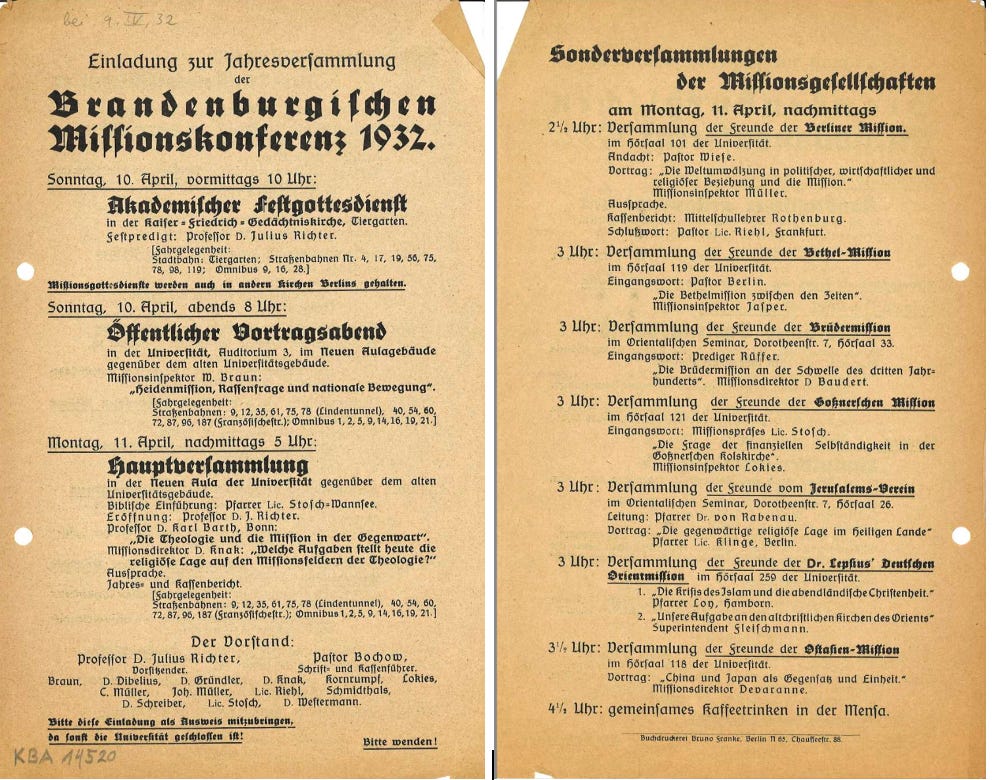
Barth’s lecture came the following afternoon, in a hall holding nearly two thousand, not all of them friendly. The Scripture reading chosen to precede Barth’s talk seemed, he thought, aimed at him. He rose anyway and delivered “Theology and Mission in the Present,” and what he said cut at the premise his hosts held most dear.
For decades, Protestant theologians had been building a richer theology of the church’s mission, and Knak was among its most influential voices. Before the conference, Barth had studied Knak’s work. The heart of it was an old axiom: grace does not destroy nature but perfects and fulfills it. The gospel, Knak held, does not abolish a nation’s character but brings it to its fullness—or, as he liked to put it, God plants a seed in each nation that Jesus Christ later causes to flower. Knak saw this formula as a way of explaining how the gospel could reach different nations without trampling on what made them distinct. The gospel did not judge or challenge Germany; it brought out German greatness.
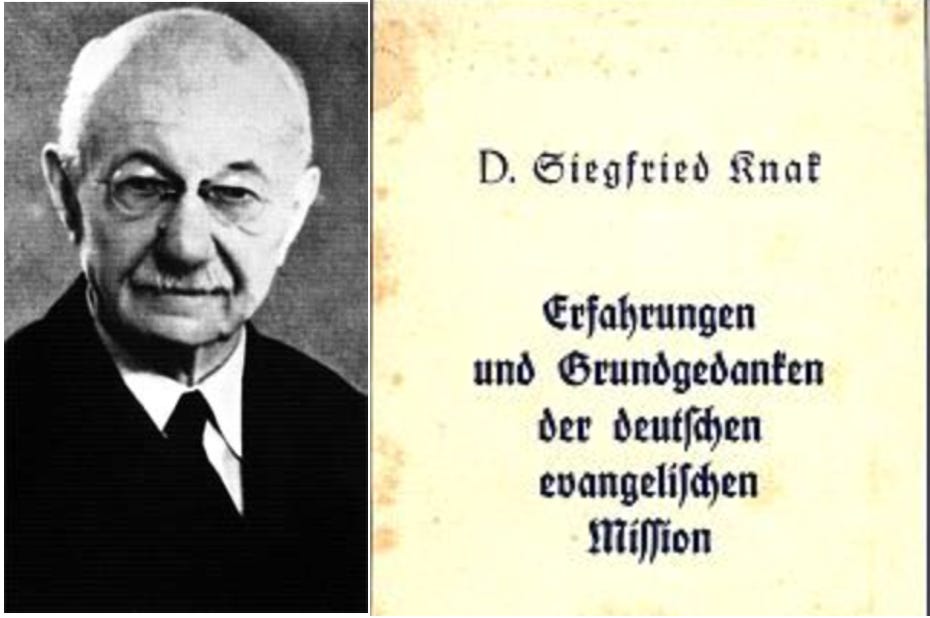
Barth saw things differently. If a nation’s prior character determined how Christ would be received, then Christ could not judge or remake it. He could only extend and confirm what the nation already believed. The gospel would not stand over German culture but dissolve into it. Christ would become, in Barth’s phrase, a German ideal.
This self-referential theology led the church into a deeper error: a posture of possession. The German church acted as if it owned Christ and the world lacked him. Salvation had become a product that the church dispensed, and the world had to be convinced, and perhaps even conquered, in order to be converted.
It is not hard to hear possessive echoes in own political moment, in the call to redeem the culture, reclaim the nation, hold the power imagined as one’s rightful heritage. A church that possesses Christ will appoint itself his guardian, draw lines, and set about auditing who truly holds him and who does not.
In reality, Barth argued, the church and the world both stand equally under God’s judgment and equally in need of God’s grace. The church must remember that it is “a church of the heathen, a church of sinners and tax collectors.” The church does not possess Christ; it stands forever in need of Christ. Strip away the possessive logic, and the church is not God’s agent tasked with confronting the culture but a recipient of God’s mercy called to share it with those who have the same need.
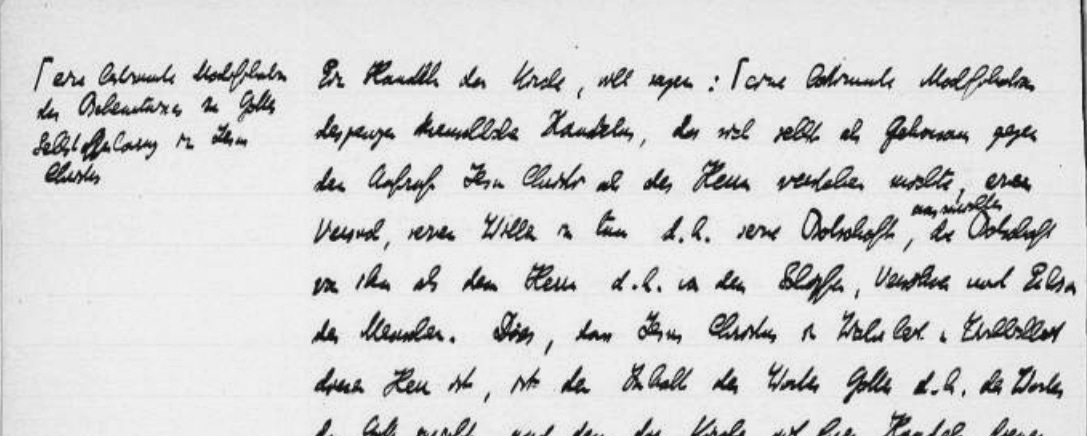
Knak was scheduled to lecture immediately after Barth. Instead, he set his prepared remarks aside and answered Barth on the spot, in what Barth remembered as “a very nasty way,” insinuating that a theologian like Barth cared more for doctrinal precision than for love of the nation and its people. The room groaned and cheered by turns.
Barth later said his exchanges with the Berlin church leaders were like talking to “a wall of deaf self-confidence.”
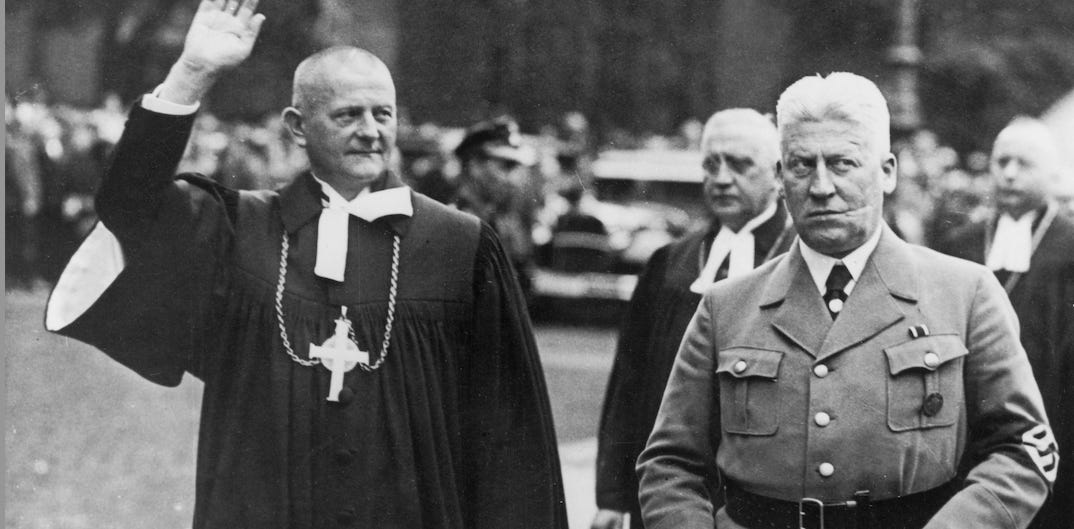
Eighteen months later, many of these same church leaders had been humbled. The German Christians—the pro-Nazi movement within the church, who taught openly that God speaks through the blood and soil of the German people—had swept the July church elections and removed many administrators from their posts. Ludwig Müller, Hitler’s chosen man, had been installed as Reich Bishop. The Aryan Paragraph, which barred those of Jewish descent from public office, now reached into the church, forcing out pastors of Jewish ancestry. The theology Barth had warned of in 1932 had borne its fruit. The fusion of gospel and nation was no longer a theory defended at a conference; it was the official theology of a church governed by heretics.
On the eve of Reformation Day, 1933, Barth returned to Berlin to lecture again on “Reformation as Decision.” The next morning, Reformation Day itself, he was invited to meet with the leadership of the Pfarrernotbund, the Emergency League of Pastors that Martin Niemöller had founded weeks earlier as the nucleus of the church resistance in Berlin. It included the leaders of the Young Reformation movement that Barth had so strongly criticized. It also included several current administrators still trying to make their way in a divided church. Among them was Siegfried Knak.
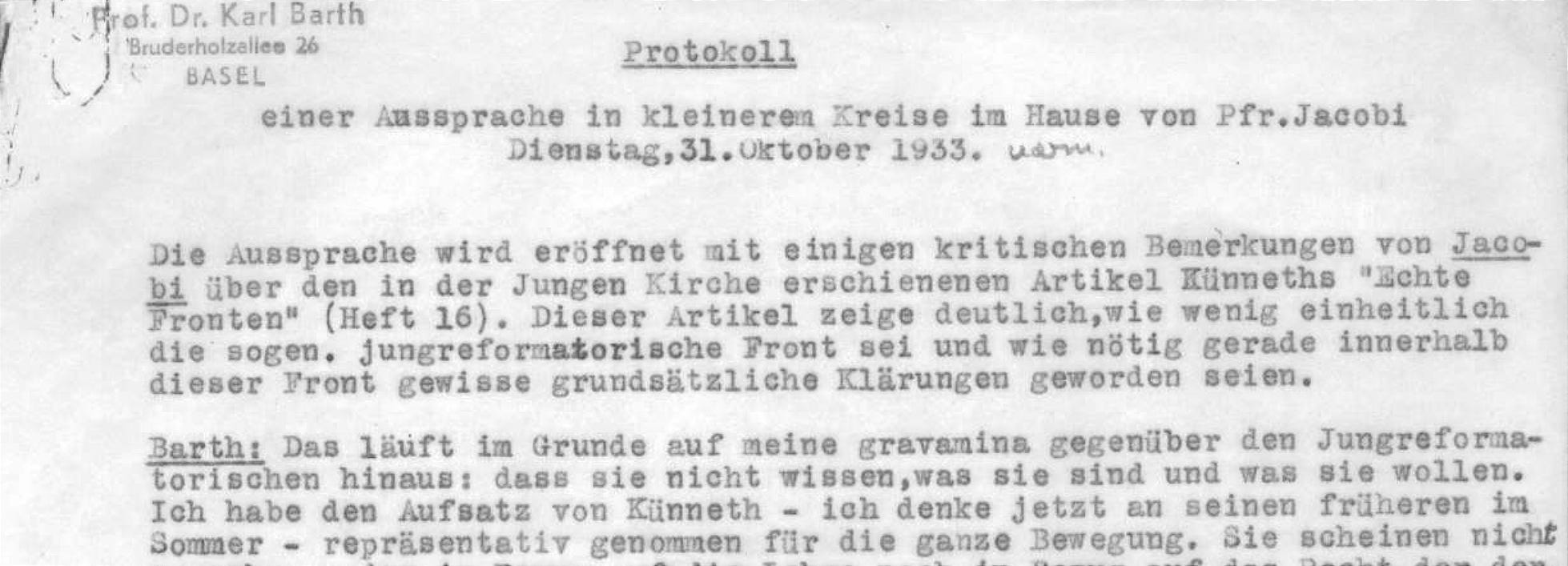
A protocol of the meeting survives, recording the conversation line by line. This time there was no silence. Barth faced an immediate barrage of questions.
Walter Künneth, one of the founders of the Young Reformation movement, asked why Barth had been publicly attacking them. They mostly agreed with Barth’s criticisms of the German Christians, but they also tried to be pragmatic in their opposition. Barth’s hard-line, either-or posture alienated those who wanted to both defend the church’s freedom and support Hitler’s government.
Barth refused to soften his stance. “Only an either-or is possible.” To cooperate with the heretical church government in any form was to grant legitimacy to state interference in the church.
Knak jumped in: “Then why not leave the church altogether?” If Barth would not cooperate with the new Reich Bishop and the German Christians, perhaps he should start his own church rather than call Protestants to adopt his extreme stance. For Knak, the cost of Barth’s position was not abstract. As Director of Mission, he was responsible for missionaries already in the field. If resisting pastors refused to work with Reich Bishop Müller, the missionary societies would be undermined and perhaps even dissolved. The better path was to cooperate with the German Christians and try to change things slowly from within.
Barth would not leave the Protestant church. The faithful were the true church, he answered; they would leave only when they were thrown out. He named Knak’s position the “yes, yes, but…” response, one he had heard from many who shared his criticisms of the German Christians but wanted a pragmatic middle path. Yes to the gospel, yes to the confession, and then the but rooted in politics, the needs of Germany, fidelity to the government, and a desire to maintain their cultural standing.
“What we need,” Barth said, “are pastors and people in the church who think and speak from here—from the confession—and not from this damned relation . . . The question is not whether we want to listen to God. All of us affirm that, even Ludwig Müller. But this is the great question: Can listening to God mean that I listen with one ear to the Holy Scripture and with the other ear to the kairos, the current cultural and political moment?”
“With me,” Knak answered, “it goes through the same ear!”
“Good,” said Barth. “But then you must admit that it involves two sources of revelation.”
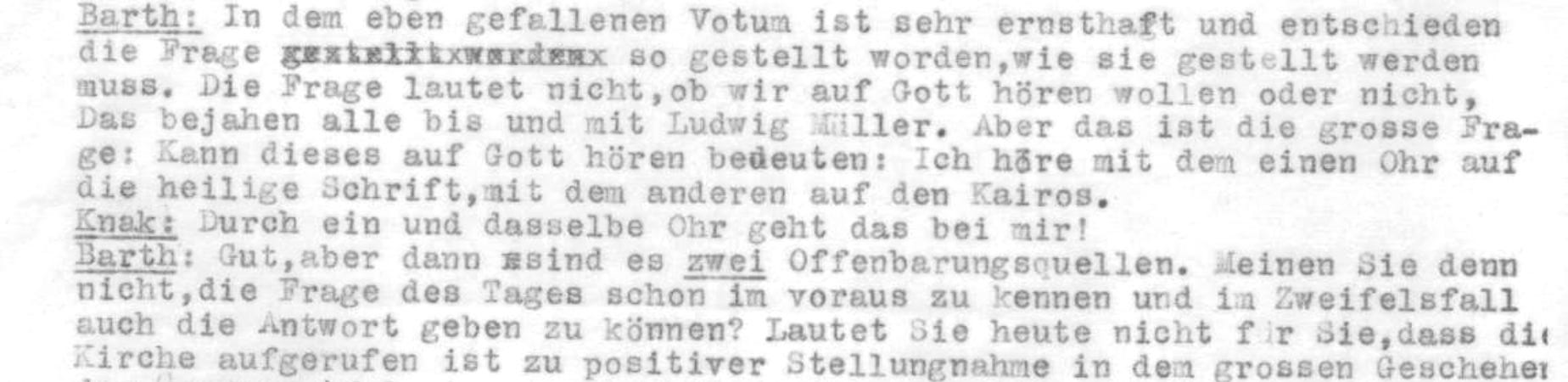
Barth had identified the seam that ran beneath everything. Knak did not believe he was hearing two voices competing for his attention. He heard one God speaking both through Scripture and through a political movement. To him, this both-and approach was not an idolatrous confusion of theology and politics but an act of faithfulness. To Barth, it was the precise mechanism by which the nation was being divinized and its leader cast as a god.
Knak did not back down. What was at stake, he said, was “whether, in the present situation of our people, we see a question from God addressed to us. A question asked not by the devil or by Hitler, but by God.” For Knak, the political movement sweeping Germany was a sign that God was at work in the nation. Politics carried theological weight. What he held against Barth, in the end, was that Barth would not even entertain the possibility that God could be working through the new government, as though God had no part in it.
Künneth broke in to call Barth’s whole way of drawing such a stark line “fanaticism and Pharisaism.” Barth, he charged, wanted to live in a pure theological world rather than engage the real-world political movement that had so radically transformed Germany. Barth dismissed the criticism: “Are we permitted to betray the church to the Antichrist? We are not.”
The key question that morning was the one on which the entire German church struggle turned: Does God speak through a second source of revelation—through a nation, a people, a movement, a political leader—or through God’s Word alone?
Within seven months Barth would write the answer into the first article of the Barmen Declaration:
Jesus Christ, as he is attested to us in Holy Scripture, is the one Word of God which we have to hear, and which we have to trust and obey in life and in death.
We reject the false doctrine that the Church could and should recognize as a source of its proclamation, beyond and besides this one Word of God, yet other events, powers, historic figures, and truths as God’s revelation.
Knak’s “same ear” is what Barmen was built to close.
What should unsettle us is that Knak was no villain. He was a devout man who had given his life to carrying the gospel across the world’s many peoples. He sincerely believed that honoring the distinct cultural characteristics that God had made for each people was the opposite of arrogance. He could not see, would not see, that the same devotion, turned homeward and wedded to a nation’s pride, had become the doorway through which the church was being annexed to serve Hitler’s political ideology.
Christian nationalism does not take hold in the church through the malice of obvious villains. It does so through the sincerity of good people who cannot discern that a second voice has joined the first in the same ear, and who go on calling this second voice, to the very end, the voice of God.

Should those of us being examined today wish for a Barmen of our own, or perhaps an afternoon when the line can be drawn in public and pointed to ever after? I don’t think so. There is no synod in America that could settle our problems; most of us do not inhabit a church body that could even call one. There will be no declaration to sign, no moment after which the matter is closed. For now, the criticisms will continue to arrive one email, one meeting, one watchlist, at a time. We will have ongoing work to do.
What Barth bequeathed us is not a solution but a posture. A posture is harder to keep, but it can be kept.
It begins with the either-or decision, which is at once narrower and more demanding than it sounds. The either-or forbids one thing and one thing only: it refuses to give the nation, a party, or an ideology any vote in what the church may hear as the voice of God. That is the whole of it. It does not require us to agree about politics, or to pretend the questions convulsing the country are small, or to deny that a Christian may love the nation and care about its life. Knak was not wrong to love Germany, and Barth never said he was. About prudence and policy and the thousand contingent judgments on which the faithful have always differed, Christians may debate without end. What we may not do is let any of it become a second source of divine revelation, a second criterion set beside the one Word of God, granted equal authority to command the church's obedience. On this point, nothing is negotiable: "Only an either-or is possible."
This posture carries a cost, one Barth understood: the instant you refuse the second voice, you will be told you have refused God. To the one who hears a single sound from two voices, a no to nationalist politics cannot be told apart from a no to God. So that is what it will be called: heretical, compromised, unfaithful. Barth was branded unloving, a fanatic, a Pharisee, a man so enamored of doctrinal precision that he could not feel what real Germans felt. Christians today will be branded woke, disloyal, liberal, elitist, captive to the age. The vocabulary turns over; the structure holds. The accusation is not evidence of actual error, nor does it mean that we have merely failed to make ourselves understood. It is the sound the second voice makes when someone declines to hear it. We must expect the labels; prepare for them; bear their burden; but not mistake them for the judgment of God.
The either-or also has two false exits, and both can pass for courage. The first is to meet a politicized faith with a faith politicized to the contrary: to draft the counter-letter, to conscript the gospel into the opposing cause, to make Christ our possession rather than theirs. But that is the same error in mirrored form. The Confessing Church did not confront Nazi ideology by becoming chaplain to the other side.
The second exit is the one Knak himself held open: why not leave? Found a pure church, decamp to another institution, stand apart from the mess and breathe clean air untainted by politics pretending to be theology. Barth refused that. The faithful, he said, are the true church; they leave only when they are thrown out. We cannot hand our institutions to those who would capture them with political ideology, nor buy comfort by withdrawing into a remnant of the agreeable. Our calling is to remain obedient to Jesus in the midst of the mess, speaking on the basis of God’s Word and not from the “damned relation.”
Beneath all of it runs the hardest discipline. To refuse the second voice is not to boast that one’s hearing is perfect. The challenge of Knak’s example is that he was devout, sincere, certain that he heard one God even as he listened to two. All of us are cut from the same cloth. The ear that could take in Scripture and a political program as a single sound is the ear each of us carries into our churches, our classrooms, our committee meetings, our inboxes. So the either-or decision must take place within us before it turns outward. It begins with a daily refusal to let our own loves and fears and loyalties settle in beside the Word of God. We must be willing to be judged by God, and to repent. We will hold the line against other voices that claim divine authority, not because we are sure we could never become Knak, but because we know how easily we could.
Barth heard two voices and refused the second. Knak heard one, and never knew it had become two. Between those two ways of hearing ran the line between a church that could be annexed by a nationalist ideology and a church that could not. Barmen identified but did not erase that line. It runs through every nation that has ever loved itself enough to mistake its own voice for the voice of God. It runs through us.
So so helpful—clear and charitable. Thank you.
Barth always clarifies my thoughts. Thank you for this post.