The Door Left to Close
Barmen and the PCA Report on Christian Nationalism


In the month before this week’s fifty-third General Assembly, the Presbyterian Church in America (PCA) did something rare among American churches: it produced a serious, theologically literate report on Christian nationalism. The document is preliminary and non-binding, and it may be amended before the process ends. That does not diminish the fact that it is among the most substantial statements a confessional Protestant body in this country has issued on the subject.
I am not a member of the PCA, nor am I likely to become one. But the question it is now weighing—what the lordship of Christ requires of a Christian in the public square, and what it forbids—is not a Presbyterian question. It is the question every Christian in America now faces, or should. There is something here for all of us to learn.
The proponents of Christian nationalism in the PCA and adjacent circles begin with the conviction that the reign of Jesus Christ cannot be fenced inside the walls of the church. Appealing to the 1646 Westminster Confession, they hold that Christ is not merely the Savior of the saved but King of kings, possessing all authority in heaven and on earth. If Christ reigns over the civil sphere, they reason, the civil magistrate ought to order the state toward Christ by protecting the church and leaning the weight of law toward the faith. On this reading, Christ’s lordship is a commission. It puts a sword in the magistrate’s hand and charges him to secure the Christian character of the nation through the instruments of the state. Everything turns on the inference that because Christ reigns over all, the state should be bent to serve him.
The church has seen a version of this theology before. In 1933, the leaders of the German Christian Faith Movement established their theology on the basis of the same inference. Their cry was not less of Christ but more: Christ over Germany, the cross and the swastika together, because surely the Lord of all was Lord of the political sphere too. They believed they were extending Christ’s reign into the nation, ushering in the great awakening of the German Volk, precisely by binding Christ to the Nazi Party.
Racial hierarchy entered this theology not as an intruder but as a houseguest. The German Christians taught that God speaks through Scripture and also through the orders of creation—family, Volk, race, nation—structures built into the world by which the Creator makes the divine will known. It was a both-and theology: Christ and the people, the gospel and the nation, revelation in the Word and revelation in German blood and history. And once a nation and its culture become a vehicle of divine revelation, its boundaries turn sacred, its purity a theological concern, its preservation a divine mandate. The German Christians' embrace of the "Aryan paragraph," which barred pastors of Jewish descent from the ministry, was the direct application of this theology.
A both-and theology does not always end in racial hierarchy, but a Christian defense of racial hierarchy almost always begins as a both-and theology. So it is no surprise that the racialized theologies now finding a foothold in the PCA and related churches rest on a both-and foundation. One increasingly prominent form is Kinism, the claim that racial hierarchies are ordered by God in creation and ought to be maintained by the church.
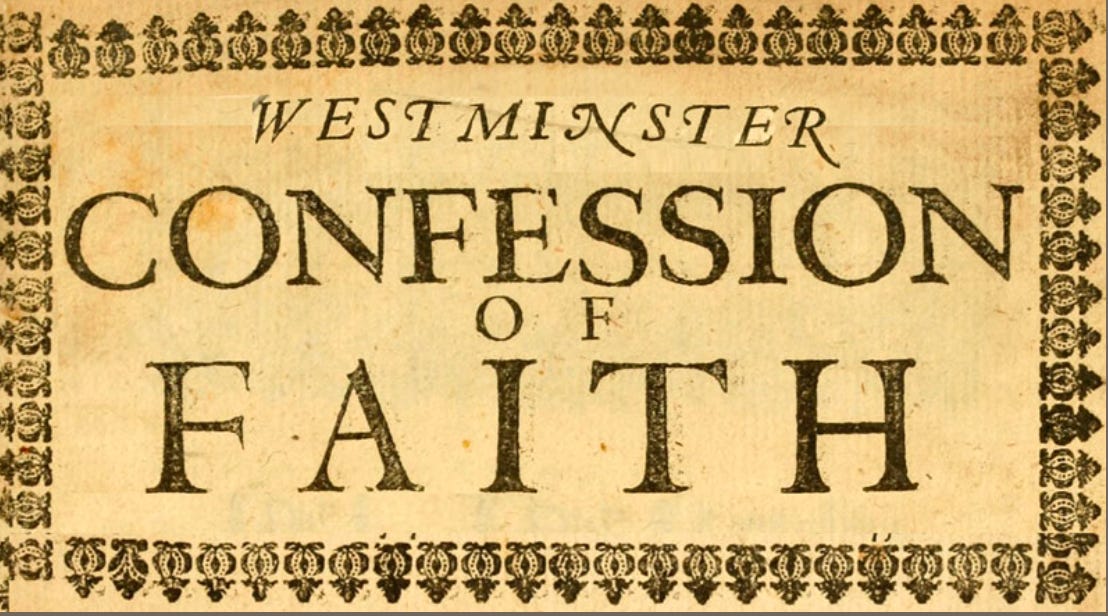
I encourage you to read the report for yourself. To its credit, it confronts Kinism and related racist views head-on. This is necessary given how much ground these views have gained in certain, vocal quarters within the PCA.
Much of the report frames a constitutional question, though the question beneath it is one any church can be made to face: What governs the theology of the church? In Presbyterian terms, which text binds an officer of the PCA: the 1646 Confession, which charges the civil magistrate to suppress heresy and summon synods, or the 1788 American revision, which forbids the magistrate to meddle in matters of faith? The report answers that the 1788 revision binds.
It also takes up a pastoral question: How does a congregation hold together people who think differently about Christ and the nation? Here it distinguishes among kinds of Christian nationalism and makes room for a range of opinion, setting out a row of positions it treats as live options and describing each with enough sympathy that adherents would recognize themselves. By deliberate choice it names no living movement and assigns no one to a camp. It draws lines—the establishment position requires a stated exception, racism disqualifies someone for ordination—but it draws these lines constitutionally, not theologically.
The lack of necessary theological lines leads to my chief critique. The report never raises the crucial theological question that should have governed everything else: May the church answer to any other lord besides Jesus Christ?
The cost of leaving this question unasked became visible in the early responses the report drew. These came mostly from proponents of one or another Christian nationalism, and the report did not move them; they could accept its arguments and keep their prior positions intact. Two responses, from opposite ends of the movement, show why. One faults the report from the side of the state, for tying the magistrate's hands where the church has no warrant to bind them. The other faults it for inconsistency: the report grants that a free political order rests on a Christian foundation, then refuses to follow that premise where it leads. They differ in tone but converge on one unmoved conviction: that the civil magistrate may rightly weigh religion in the terms of political membership, such as who is admitted to the country, who may hold public office.
The report does bar that conviction, but with the wrong kind of bar. The report appeals to the 1788 revision, which forbids the magistrate to meddle in the faith of the church. The respondents grant this appeal and step past it, because the magistrate they have in mind is not reaching into the church's faith but ordering the civil sphere. There the report posts a constitutional bar but never a theological one, and a constitutional bar is one a Christian nationalist can simply step over.
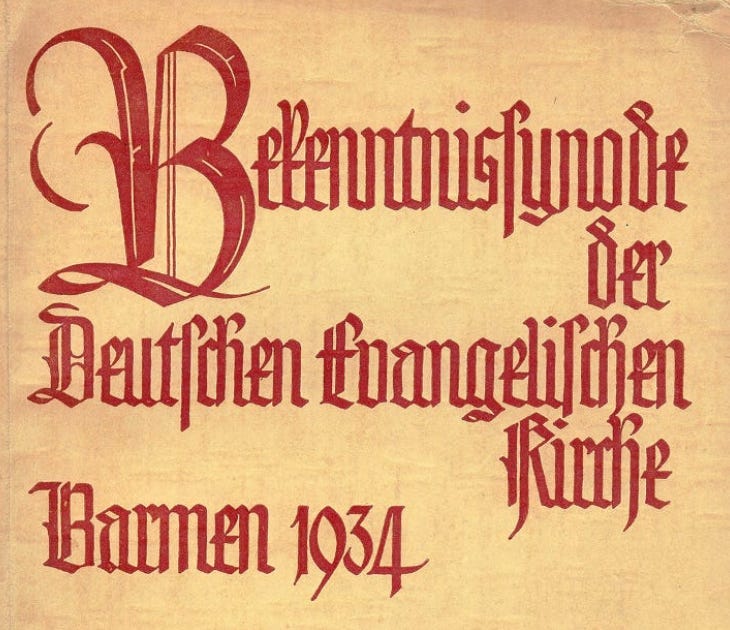
Set this against the Barmen Declaration, issued by the German Confessing Church in May 1934, which began with a theological question and an answer that admits no compromise.
Jesus Christ, as he is attested to us in Holy Scripture, is the one Word of God which we have to hear, and which we have to trust and obey in life and in death.
We reject the false doctrine that the Church could and should recognize as a source of its proclamation, beyond and besides this one Word of God, yet other events, powers, historic figures, and truths as God’s revelation.
Barmen was an either-or confession. On the matter of God’s Word and work in the world, it declared, there is no spectrum to map and no middle to occupy. The nation’s destiny, the anxiety over a shrinking Christian influence, the felt crisis of a culture slipping its moorings may all be worth the church’s attention. But none is a Word of God that can direct the church’s obedience or command its loyalty. Jesus Christ himself is the one Word the church must hear, and it must acknowledge no other event, power, or figure as a second source of divine revelation beside him.
The PCA report shows what it costs to stop short of this theological line. It condemns Kinism, racial hierarchy, and ethnic partiality, but it leaves the both-and premise beneath them standing. Its seventh affirmation grants that God has ordered humanity into distinct peoples and nations, and that Christians may love their communities and cultural inheritances “as gifts of God’s providential care.” It then denies that these orders of creation establish any hierarchy or confer superior worth.
But this line will not hold for long in the current environment, because the report never asks the question that would secure it: May the gifts of God's providence be handed to the civil magistrate to enforce? The orders of creation the seventh affirmation names—people, nation, cultural inheritance—are the very orders the German Christians treated as a second source of revelation beside the Word. Racial hierarchy is one thing that second source produces; a sacralized nation, its Christian character secured by the magistrate's law, is another. These are not two theologies but one, drawing on the same well. The report shuts the front door and leaves the back door wide open.
Barmen closes both doors at once. Its first thesis allows the church no message drawn from the orders of creation to stand beside the Word of God in Jesus Christ. It then draws out the implication most sharply in its second thesis, which affirms Christ's cosmic reign as strongly as any nationalist ever has—and turns it against every form of Christian nationalism.
“Jesus Christ has been made wisdom and righteousness and sanctification and redemption for us by God.” (1 Cor. 1:30)
As Jesus Christ is God’s comforting pronouncement of the forgiveness of all our sins, so, and with equal seriousness, he is also God’s vigorous announcement of his claim upon our whole life. Through him there comes to us joyful liberation from the godless ties of this world for free, grateful service to his creatures.
We reject the false doctrine that there could be areas of our life in which we would belong not to Jesus Christ but to other lords, areas in which we would not need justification and sanctification through him.
Yes, Christ is Lord over every sphere of life. But precisely because Christ alone is Lord, no earthly power may claim the authority that belongs to him. The universal kingship of Christ does not consecrate a Christian magistracy; it desacralizes every magistracy, Christian and pagan alike, stripping each of its pretension to bear divine revelation or to command ultimate loyalty. Yes, God works beyond the church, even in goods of the state the church did not build and does not control. But that work is God’s—hidden and free and providential—not handed to the church as a blueprint for Christian privilege through the use of state power. To convert God’s governance of the nations into a political program for establishing the faith by state law is not to honor the reign of Christ. It is to seize it.
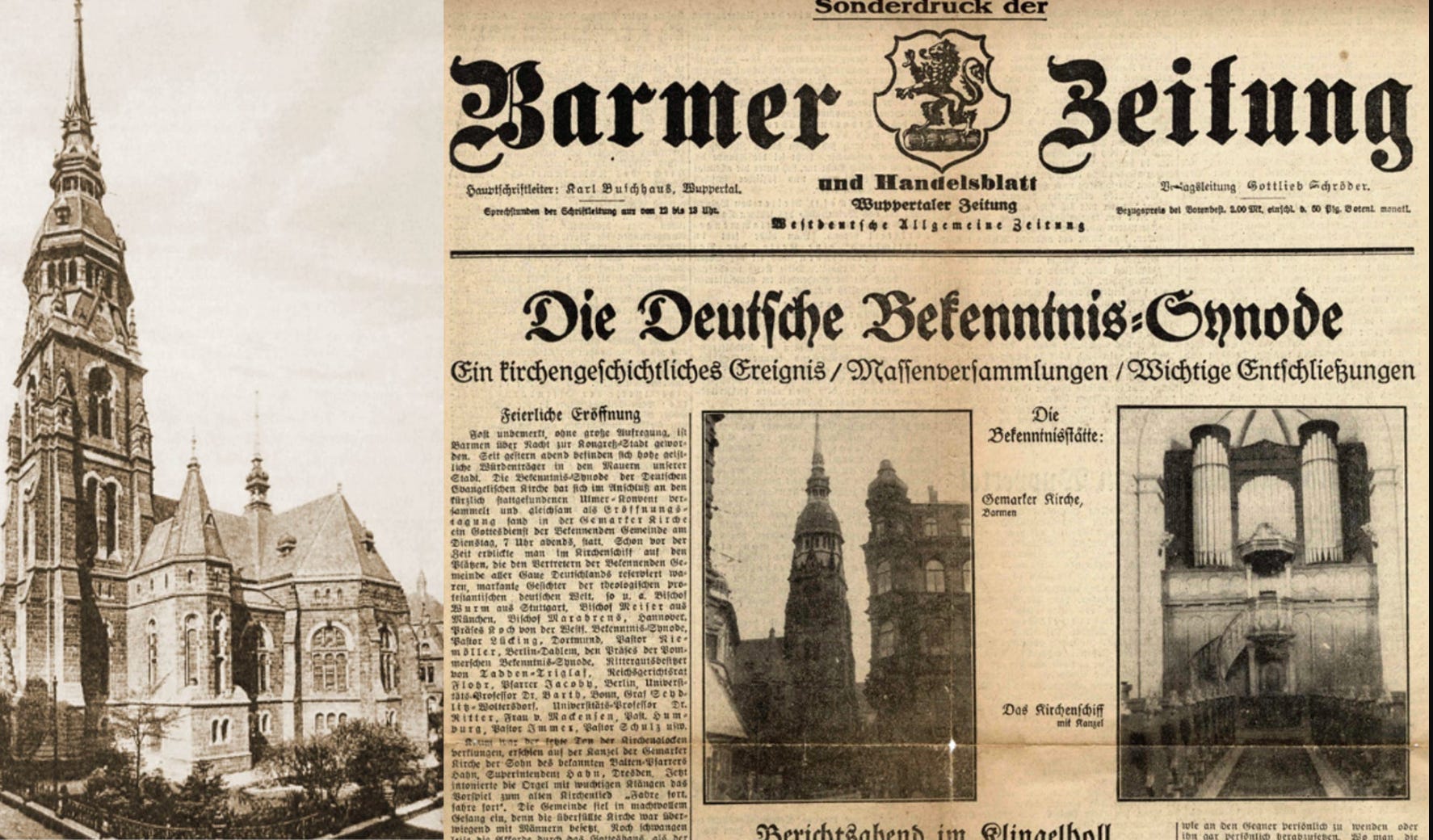
In Barmen’s hands, the universal reign of Christ over the state is not a mandate for the state to act on behalf of the church or for the church to give its loyalty to the state. It is the ground on which the church refuses to let the state be sacralized. And Barmen refuses this not on proceduralist grounds, not out of a wish for a neutral public square, but because the church has one Lord and cannot hand the state the loyalty the state always wants. The freedom of the church from the magistrate is not the freedom of the liberal order. It is the freedom of a community that confesses Christ as its sole Lord and is therefore unavailable for capture by any state, hostile or friendly. The church belongs to Jesus Christ alone.
The Christian nationalist and the Confessing Church begin from the same sentence—Christ is Lord of all—and end in opposite places. One arrives at a magistrate who privileges the church and a nation whose Christian character is enforced as a public good. The other arrives at a church so wholly possessed by the sole lordship of Christ that it will surrender no piece of that lordship to any earthly power, least of all when the state offers to be its friend. As it stands, the PCA report does not ask its readers to decide between these two options.
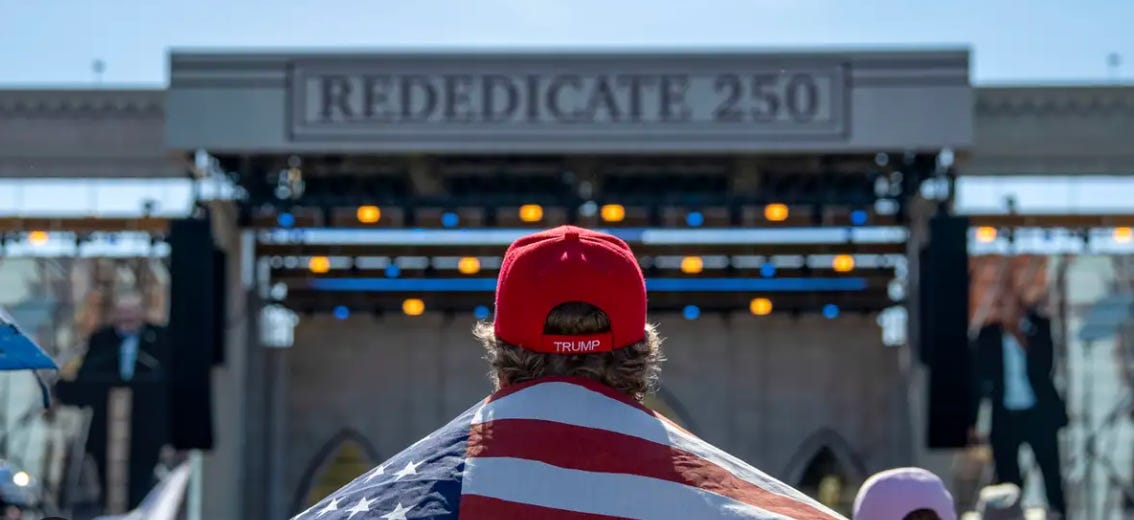
Beneath this lies a deeper thing the report does not see, an assumption so far beneath its argument it is easy to miss: that the church is the place where faithfulness is always kept, and that the primary task of its theologians is therefore to hold as many members peaceably inside it as possible. What the report cannot imagine is a captured church, a moment when faithfulness means confessing not within the institution but against it.
I do not know whether the PCA has reached the point of capture, but many churches in America have. To meet that moment, the church’s theologians must attend not only to the words of Barmen but to its posture. Barmen was not written inside a healthy church managing its disagreements, nor even a chastened church repenting of its sins. It was written after the church had been seized, when obedience to Christ required confessing against many of its members.
Any response equal to Christian nationalism in America today must picture not only the erring Christian but the captured church. It cannot treat the danger as a problem to be managed. It must be ready, should it ever come to that, to confess against its own house and bear the cost of separation. And that kind of confession requires clarity on the theological questions that matter most.
As an outsider, I have no standing to tell anyone in the PCA what or how to confess. But I can point out that a resource for a stronger response is already in the house, older than the present quarrel.
When the American Presbyterians revised the Confession in 1788 and rejected the magistrate’s power to suppress heresy and summon synods, they were not tidying church procedure. They were making a theological decision, and a momentous one: they refused to let the state govern the faith of the church, and they wrote the refusal down. This is what any church does when it will not hand its faith to the state: it confesses that it will follow Jesus Christ alone.
The report treats the 1788 revision as an inheritance, a text the heirs are bound to administer. But this revision reads less like a constitution than a confession. The heirs of a confession are never merely asked whether they can administer it. They are asked whether they can make the same decision again.
A confession is not a thing a church does once. It is an act the church must perform afresh each time the lordship of Christ is claimed by some other lord—even, and especially, when that other lord arrives speaking the church’s own language and promising to magnify the name of Christ on its behalf. That is the door the report leaves standing open: not the front door of racial hierarchy, which it shut, but the back door of the sacralized nation, through which these other lords still come and go. The question is who will close it, and whether they will know, when the moment comes, that it was theirs to close all along.
Preorder my book: Karl Barth and the Idolatry of the Nation
Please note: The Presbyterian Church in America (PCS) is not the same denomination as the mainline Presbyterian Church in the United States of America (PCUSA). The latter still looks to the bible as primary authority and the confessions as secondary authority in matters of faith… and adheres to the Barmen’s statement that there are no lords but Jesus Christ.
I'm learning so much from you. Thank you!