The Word That Interrupted
Karl Barth and the Decision the Church Cannot Take Back

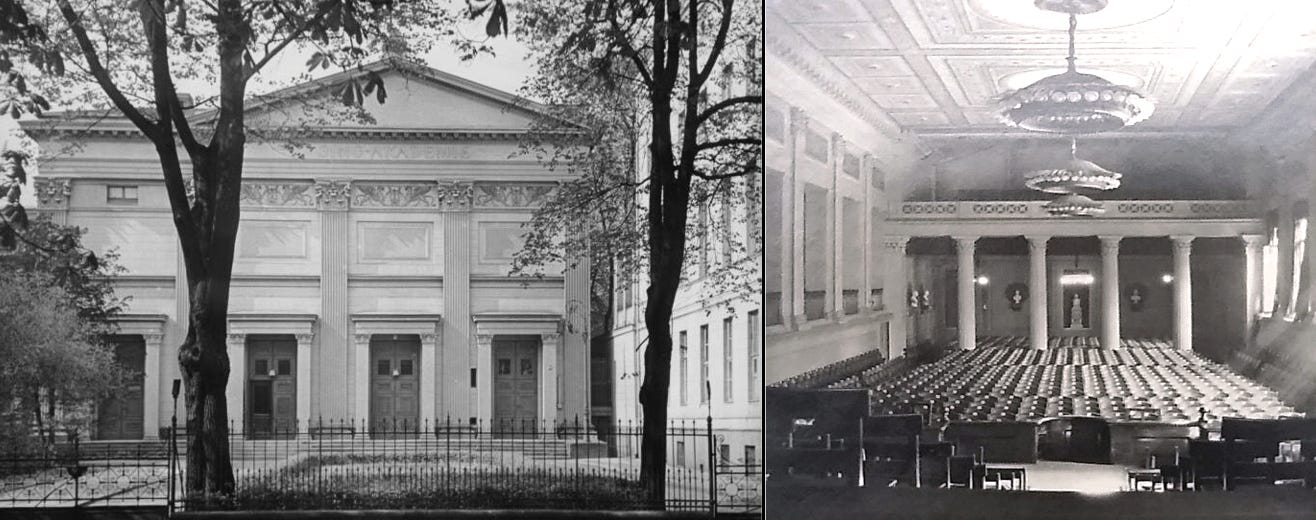
On the evening of October 30, 1933, about a thousand people made their way into the Berlin Sing-Akademie for a lecture that had hardly been advertised. The organizers had printed no posters or public notices because they feared the meeting would be prohibited. News of the event spread mostly word of mouth. Still, by eight o’clock, the hall was full.
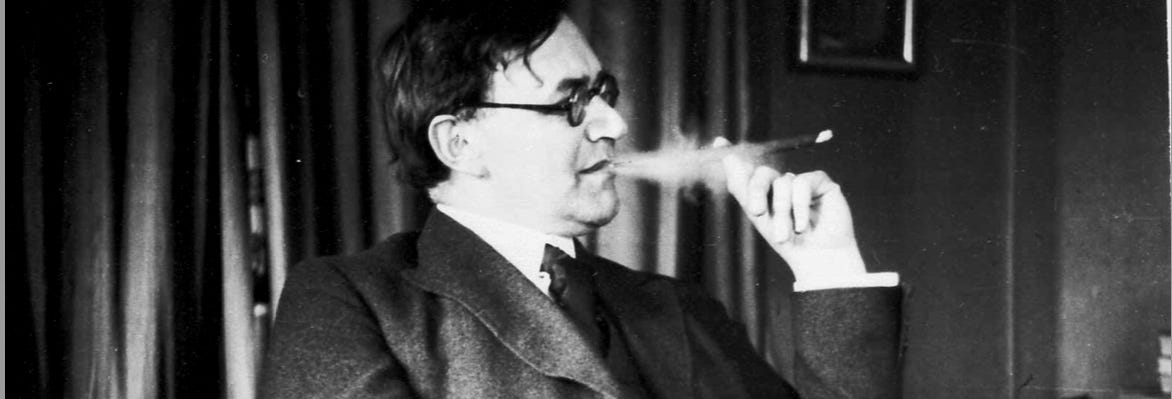
The audience came to hear Karl Barth. Nine months earlier Hitler had become chancellor, and the German Christian Faith Movement had risen to dominate the Protestant church and remake it in the image of the Nazi state. Barth had been fighting them in print since the summer. Now he had been asked to fight in the open.
This was not the safest venue, and Barth would not choose safe words. Before the evening was over he would declare that the church had no choice but to resist what was taking place in Germany. When Barth used that word, the hall broke into applause, creating an “enormous echo” that prevented him from speaking for several minutes.
To understand why a thousand people responded in this way to an unadvertised theology lecture, we have to begin with a birthday party.
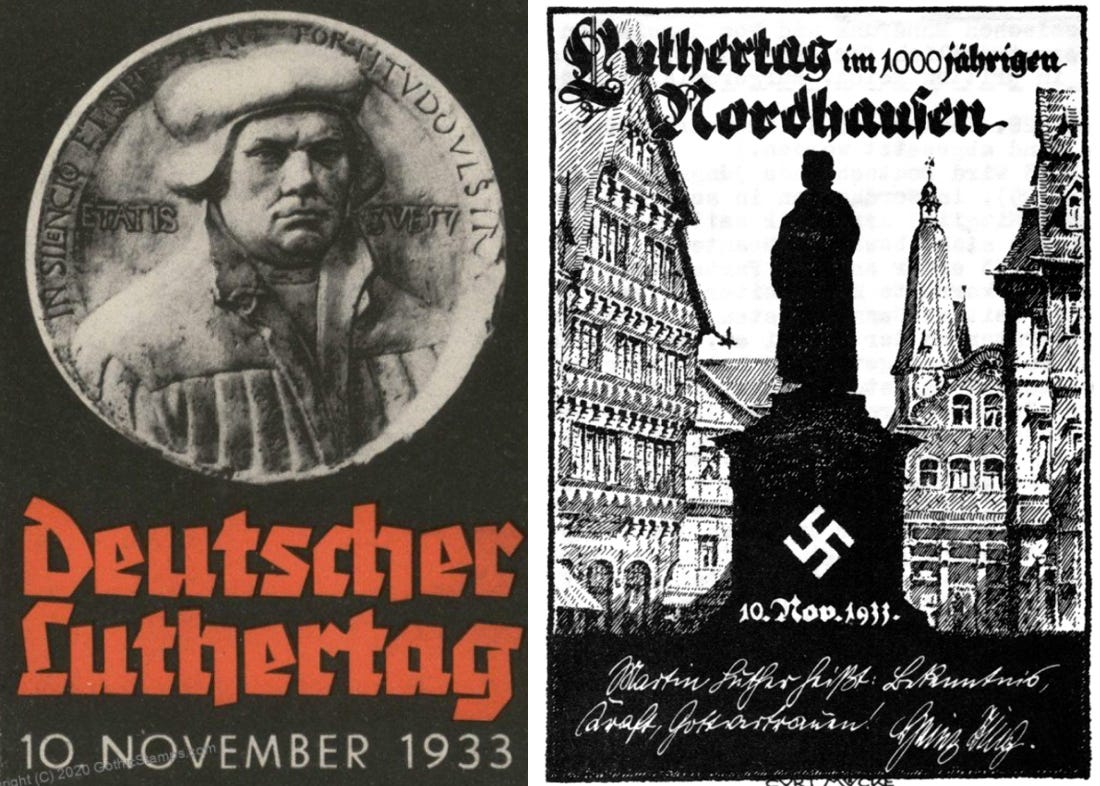
Martin Luther would have turned four hundred and fifty on November 10, 1933, and the German Christians intended to mark his birthday with a grandeur, one organizer promised, “as the world has not seen.” They planned a “German Luther Day,” with radio broadcasts, marches featuring the “procession of church and swastika flags,” and “historical hours” in which Luther’s contributions to Germany would be remembered.
In the public announcement, Friedrich Wieneke, the German Christian administrator for theology and higher education, declared that Luther would be lifted up “as the archetype and model of German faith and German manliness.” The German Christians were his legitimate heirs, and the goals of the Reformation were finally being fulfilled in the Third Reich.
Barth’s copy of the announcement survives. He underlined much of the text in red and placed an exclamation point in the margin.
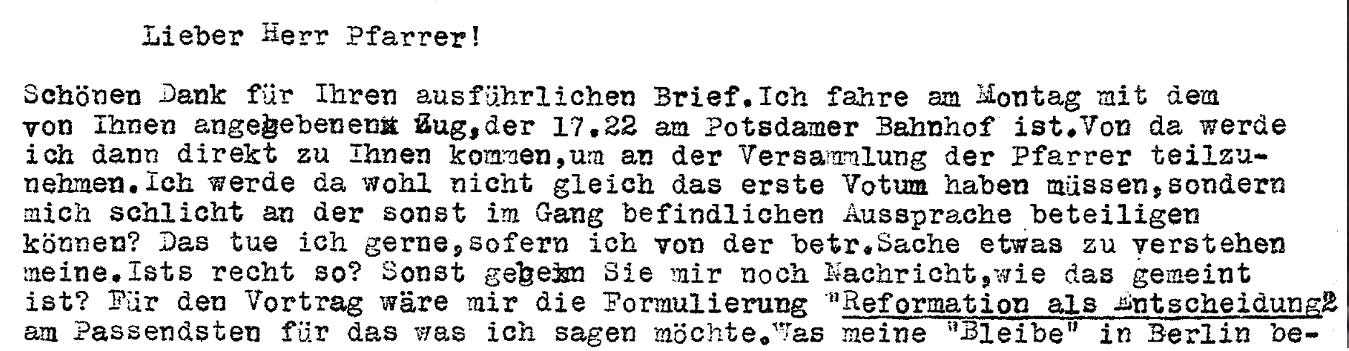
He soon received an invitation from Gerhard Jacobi, a former student who was now a pastor at the center of the church resistance in Berlin. The “hair-raising falsification of the Reformation” had to be answered, Jacobi wrote, and answered in Berlin, the seat of the Third Reich and the church government. He did not want a modest protest. “We do not want to be content with small hand grenades,” he told Barth, “but want to fire a 42-centimeter cannon. That is why we have asked you to be the mortar.”
Barth accepted the invitation, but he declined to bring the artillery. He would arrive as “a plain front-line soldier.” For a title he proposed three words that would challenge the German Christians’ misreading of theological history: Reformation as Decision.
Barth opened with a question. For four hundred years, every Protestant movement had tried to claim the Reformation and “pose as the true heirs of its spirit.” The German Christians now sought to do the same. By what right could they draw this connection? Who can rightly claim to be an heir of the Reformation?
Some answered by pointing to the Reformation’s cultural and political achievements, its service to the unity of Germany. But with the break from the Catholic Church in mind, Barth dispatched this idea: “One may find it difficult to say that the actual consequence of the life work of Martin Luther has been beneficial to the internal and external unity of the German people.” Others made the Reformers into great men, heroes in the gallery of poets and philosophers and kings. But to honor these complicated figures on those terms, one would have to “idealize and correct their actual character.” Still others praised the Reformation as a high season of religious feeling, a time when “the forces of inwardness burst out.” But the actual Reformers, Barth noted, spent their time arguing about theological ideas. They were not mystics.
All these appeals fell flat in light of the actual history of the Reformation. And none of them, Barth insisted, explained the most important thing about this history that needs explaining: Why did the Reformation produce a church?
The Reformers’ own answer was that they had recovered the pure teaching of central Christian truths about Scripture, grace, and faith that the medieval church had half-forgotten. Barth accepted this answer, but he pushed past it to something deeper.
What made the Reformers’ teaching pure was not its content but its form. The same truth can be held two ways: as one belief among others, weighed against the rest, or as the single conviction that seizes you and tolerates no rival. Here, Barth argued, was the answer they had been looking for: The Reformation founded a church because the Reformers based their lives on a singular decision, just as the prophets and apostles had before them. Their teaching “had only one dimension, one concern, one purpose.” It did not compare, did not weigh, did not negotiate; it “presents, it explains, it disputes.”
This was the extraordinary element that made the Reformation powerful, and only those who shared it could claim to be its true heirs. “Reformation is decision,” Barth told the hall, “and the church of the Reformation is there and only there where there is a decision.”
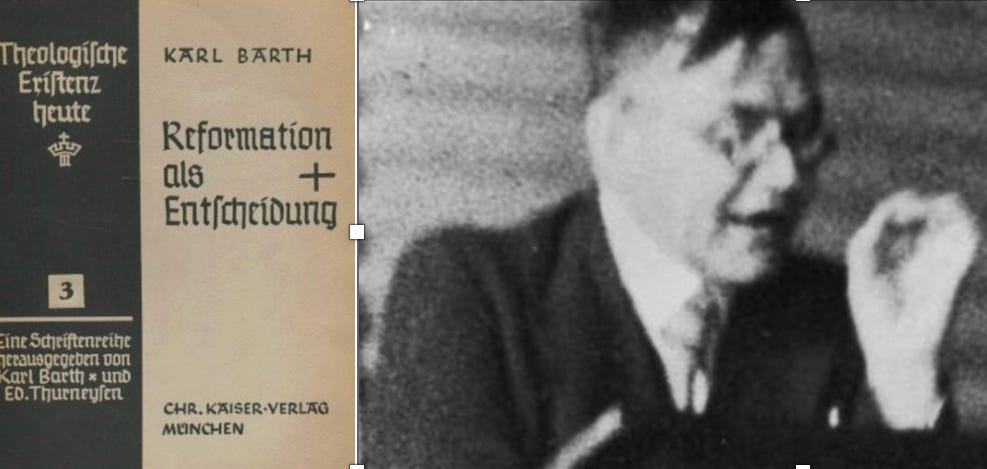
What did Barth mean by decision? He explained that most human decisions are revisable; we bind ourselves in ways that preserve our freedom to change our mind later. The decision of faith is the exception. “To reach this decision means to freely surrender one’s freedom,” Barth said. To declare faith in Jesus Christ is to make a decision from which there is no turning back or altering course. Discipleship demands that we “say yes or no, want this or that, stand here or there.”
Barth located the sharpest form of the decision in the words of Jesus himself: “You cannot serve God and mammon.” Notice, Barth said, that “it does not say, ‘You should not’ but ‘You cannot.’” The decision of faith is not an intellectual affirmation or a feeling. It is the entrance into a certain kind of captivity: “You are captured in this decision. Every future decision in your life, viewed from it, can only be this decision’s repetition and confirmation. You are God’s.”
All retreat is barred, and every other door is closed. The decision of faith moves the believer away from the self and toward God, the one who decided to be for us in Jesus Christ. This is what the Reformers emphasized in the doctrine of election: faith does not begin in our choosing of God but in God's prior choosing of us, a choice that summons our faithful response. This exclusive, either-or decision in response to God’s decision is the secret of the Reformation’s power.
It was precisely this either-or decision, Barth said, that the Protestant church had spent four centuries abandoning.
This betrayal happened beneath the surface. The church that abandons its exclusive decision does not stop preaching the gospel or reciting its creed. What changes is the form. The church no longer thinks and speaks out of its exclusive decision, but “on the basis of reflection and comparison, on the basis of the greater unity of two possibilities, only one of which is the Christian faith.”

Barth illustrated with the image of a scale. The Christian faith is laid on one arm of a scale and a second thing is placed on the other. The believer stands above the scale as “the little indicator,” judiciously weighing the options, keeping the two in the right balance. In earlier centuries the second thing alongside faith had been morality, or reason, or culture. Now it was the German nation. And here was the trap: once faith has a partner on the scale, the partner always wins. The energy, the passion, and the certainty always migrate to the relationship between the Christian faith and this second thing until this relationship becomes more important than the content of the faith itself. The question is no longer whether the nation is truly faithful, but whether the faith is truly national. Everyone on the scale believes he is merely keeping the balance, but that is precisely what produces captivity. The faith is not denied, but it is kept the way one keeps a servant: “a domesticated, an imprisoned faith, a faith that is put into foreign service.”
The result, Barth said in a paraphrase of Luther, is “a different faith, a different Christ, a different proclamation, a different church.” The fusion of Christian and German, the both-and that sets allegiance to Christ and the nation on the scale, is offered as a way of living out one’s faith, not refusing it. That is why so few recognize it. Idolatry almost always arrives dressed as devotion.
As we will see in a few weeks, Barth would use this line from Luther again three months later during a critical meeting of senior church leaders in Berlin. The leaders were preparing to make a direct appeal to Hitler in the hope that he would strike a deal to grant the church administrative freedom. In exchange, they were willing to promise that the Protestant church would not publicly object to the government’s policies.
Barth denounced this plan, telling them almost word for word what he had told the Sing-Akademie: this compromise would not yield a stronger or safer church, but a completely different one. No one can serve God and mammon at the same time. The church must make a decision: either trust its future to Jesus Christ or do not trust him at all.
The church faces this decision in every era, especially our own.
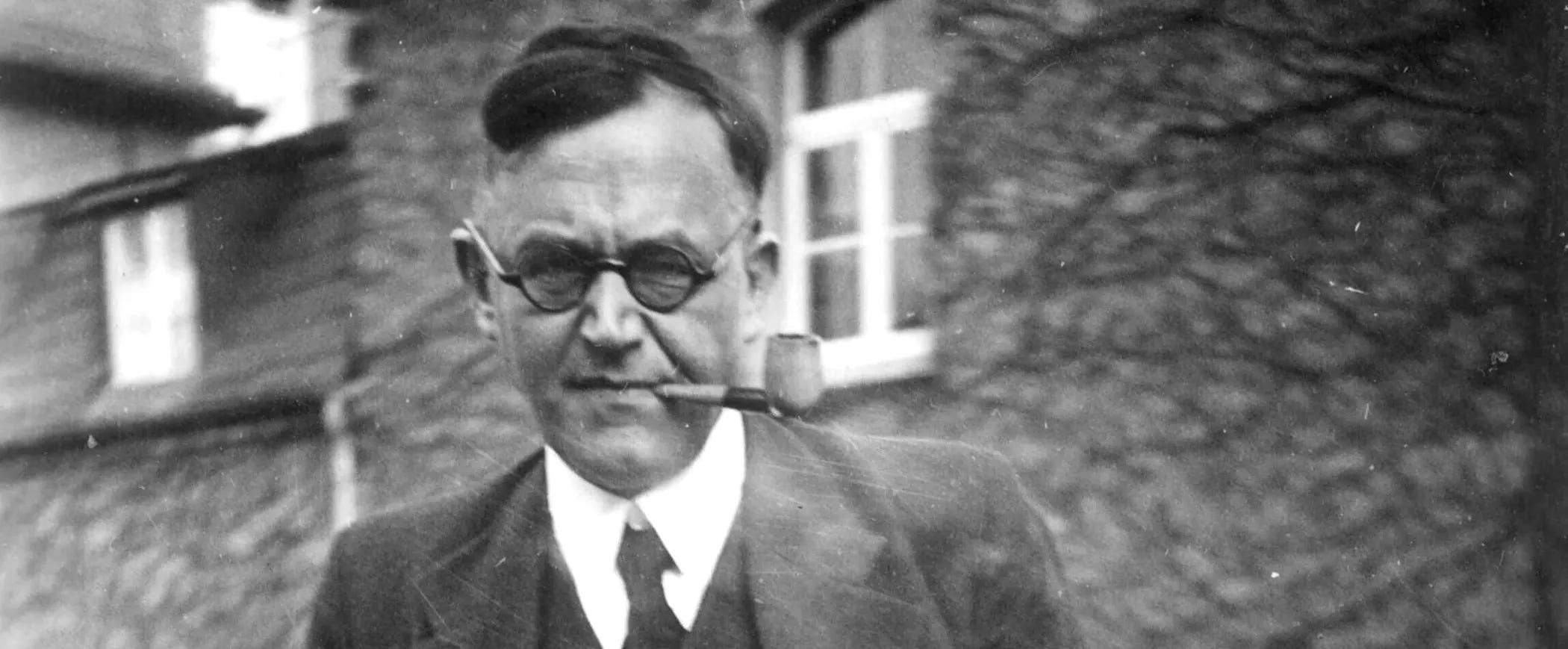
Back on the night of October 30, the hall was full, and the word that would interrupt the lecture had not yet been spoken. Barth stood at the podium and called the audience to make their own decision. If they wanted to link the Protestant church with the German nation, they were free to do so. But they must also give up any claim to the Reformation—”yes, the Luther festivals should perhaps then be discontinued.”
If they want to be the church of the Reformation, then they must not claim the Reformation but ask if the Reformers would claim them. That means asking the question: are they living in light of a decision about Jesus Christ that cannot be revised or placed on the scale with something else? And if the honest answer is no, then those who have not yet been captured by the church’s compromise know exactly what they must do.
They must resist by calling the church to be loyal to Christ alone.
That was the word—resist—that caused the hall to erupt and stop the lecture for minutes. When Barth resumed speaking, he reached for an old story to explain the posture they must take in the days ahead. When the Swiss foot soldiers at Sempach faced the armored line of Leopold of Austria, one of them is supposed to have cried, “Strike their spears, for they are hollow!” The nationalist movement that looks so strong right now, Barth told the room, is hollow in just this way, “no matter how powerful he may pretend to be.” Their bluster and bravado give them away. The resistance should boldly declare this fact, even if they can barely muster the confidence to do so. In fact, it is far better to declare the truth with humility, because their hope must rest in Christ rather than themselves.
To drive home his point, Barth quoted a letter that John Calvin had once addressed to an emperor. The reformation of the church, Calvin wrote, is God’s work, “as independent of human hope and intention as the resurrection of the dead.” One does not wait for favorable circumstances or the good will of the crowd; one simply speaks into the present despair and declares what is true. Barth closed with the words he chose to leave ringing in the hall: “God will have the gospel preached. Let us obey this command and go where God calls us. What the success will be is none of our business.”
He did not tell the room that they had to be politically strategic or effective. He did not call them to be confident in their righteousness or capacities. He told them to preach the gospel, trust in the power of Jesus Christ, and remember that the Reformation was not a heritage to be claimed but a question they must answer: Have they made the decision from which there is no turning back?

The question outlives the room in which it was asked, because the temptation Barth named did not end in 1933.
On May 17, 2026, thousands gathered on the National Mall in Washington to “rededicate” the United States as “One Nation Under God,” seven weeks before its two hundred and fiftieth birthday. They assembled before a stage raised against the Washington Monument: grand columns built to resemble a federal building, and beneath them a row of arched stained-glass windows—the church’s traditional way of picturing its saints—in which the nation’s founders stood, a white cross among them. The fusion placed Jesus Christ beside the nation, the both-and embodied, the pairing presented as an act of honor.
On that stage, the Speaker of the House led the crowd in a prayer of rededication: "we hereby rededicate the United States of America as one nation under God." Then a video played. Filmed in the Oval Office, the President read aloud from 2 Chronicles: “If my people, which are called by my name, shall humble themselves and pray . . . then will I hear from heaven . . . and will heal their land.” These words were first spoken to Israel, the people God had chosen to bring salvation to the world, to call them to enact justice for the poor. Read over a crowd on the Mall, the divine promise changed owners and content. The election the Bible locates in God’s decision to be for us in Israel’s Messiah, Jesus Christ—the one foundation against every rival on the scale—was transferred to the United States, its monuments, its founders, its land, its President, and his agenda.
This is what the scale always yields. The Christian faith was not denied on that stage; it was declared loudly and prophetically. But what was being weighed there, once again, was the relationship between Christ and nation. The joining of the two announced itself as devotion rather than betrayal. The little indicators, then as now, are certain they are keeping the balance. But they have already decided.

In light of your argument, the photo from the National Mall brings to mind the "white-washed tombs" Jesus condemned.
Such great information and analysis. From Barth’s mouth came the words of God. Thanks for the reminder!